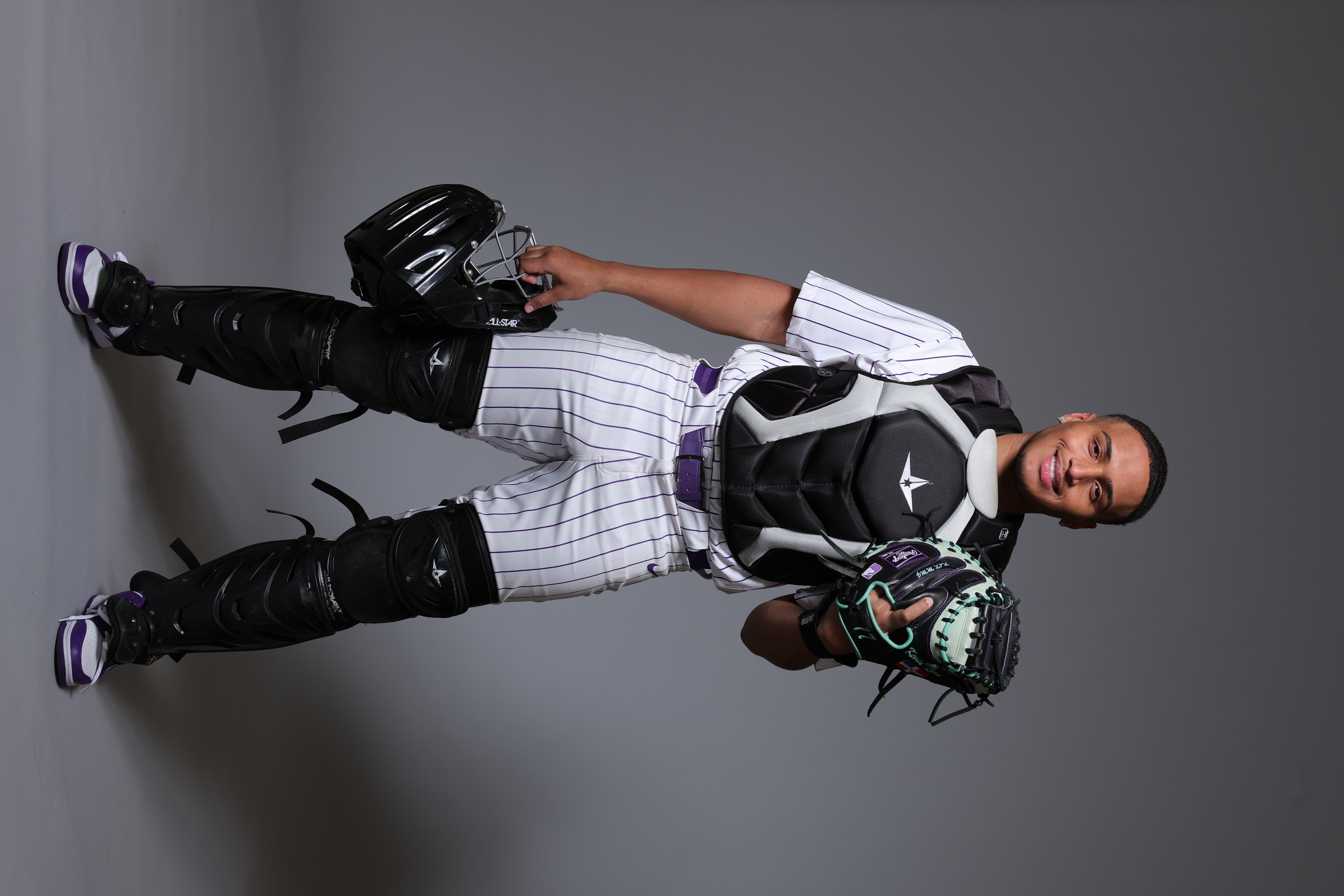
Engineer · Entrepreneur · GLASS Scholar · Global Leader
B.S. Mechanical Engineering · NYU Tandon School of Engineering · Class of 2026 · GPA 3.84. Building sustainable cities, smarter infrastructure, and a more equitable housing market , one project, one community, one country at a time.
About Me
My name is Kevin Lora. I grew up in Union, New Jersey as the son of Dominican immigrants, shaped by a household that valued hard work, community, and the belief that education is the most powerful tool available to anyone willing to use it. That upbringing became the foundation for everything that followed , including the decision to pursue mechanical engineering at NYU Tandon, one of the most rigorous engineering programs in the country.
Engineering, for me, has never been purely about technology. It has always been about what technology can do for people. From my very first year at Tandon, I was drawn to projects and opportunities that connected technical rigor to real-world impact , whether that meant teaching first-year students how to design solar-powered rovers, or spending summers on the ground with BNSF Railway learning how the national rail infrastructure actually works. The classroom has always been a starting point, never a destination.
Working alongside my mother in her real estate business introduced me early to property analysis, deal structuring, and long-term financial vision. That experience revealed a flaw in traditional development that I could not stop thinking about: affordability and sustainability are consistently treated as charitable add-ons rather than core business drivers. KCL Holdings LLC was built to prove they do not have to be. Through a phased investment model, it is working toward a future where quality housing and environmental responsibility are inseparable goals , not competing ones.
Outside the classroom and the office, I spent three years representing NYU as a catcher on the baseball team. Baseball taught me things that engineering courses cannot fully replicate , including how to fail publicly, reset mentally, and perform under pressure when the stakes are real and the margin for error is zero. Those lessons carry into every project, every pitch, and every decision.
"My mission is to build wealth ethically while addressing the twin crises of affordability and climate change , proving that responsible real estate development can be a genuinely profitable pathway for engineers willing to think beyond the blueprint."
Core Focus Areas
Honors & Awards
GLASS Program
The Global Leaders and Scholars in STEM (GLASS) program at NYU Tandon is an honors program built around five core pillars, called windows, that together define what it means to be a globally conscious engineer. Every GLASS scholar must complete at least 12 distinct components across all five windows, with a minimum of two per window, by the time they graduate. The goal is not simply to accumulate experiences, but to develop a coherent perspective on a specific global challenge and to produce original work that reflects three years of growth.
The global challenge that has anchored this entire journey is sustainable cities and affordable housing, directly aligned with United Nations Sustainable Development Goal 11: Sustainable Cities and Communities. Every experience below, from Fiji to the SHPE conference floor, was shaped by and contributed to that throughline. Fifteen components are documented below, exceeding the 12-component requirement across all five windows.
GLASS Final Deliverables
Three years of GLASS experiences, projects, and global travel have come together into a collection of work that reflects what it means to be an engineer who thinks beyond the lab. Below are the key documents from that journey: the business proposal that sits at the intersection of engineering and real estate, a personal reflection on how the GLASS experiences shaped the thinking behind it, and the résumé that captures it all in a single page.
Engineering Projects
As a mechanical engineer, the work has always been driven by a commitment to designing systems that are technically rigorous and practically impactful. The portfolio below spans product development, mechatronics, computational analysis, biomedical engineering, and entrepreneurship. Each project is shaped by data-driven decisions and a relentless focus on solving problems that matter to real people.
A hand-motion driven surveillance probe built entirely without a traditional controller. The vehicle responds to gyroscopic tilt detected by an onboard sensor, translating the operator's hand movements into directional commands in real time. Powered by solar energy and streaming live footage directly to an iPhone, Replevi demonstrated that intuitive, controller-free robotics is achievable with the right sensor integration. The project was coded in C++ and Python, presented at a formal NYU Rapid Application Development showcase, and later exhibited as an art installation at NYU Abu Dhabi.
A reimagined supermarket checkout experience that eliminates the traditional cashier line entirely by integrating item scanning and payment processing directly into the shopping cart. As shoppers add items, the cart scans and tallies them automatically. At the exit, payment is completed through the cart itself: no line, no wait, no friction. The project required co-designing the hardware mounting system, the embedded scanning interface, and the user payment flow as a single cohesive product experience.
Developed at NYU Abu Dhabi in the Manus et Machina course, Vita Fume is a vitamin-infused daily perfume engineered specifically for efficient transdermal absorption, meaning the vitamins pass through the skin upon application rather than requiring oral ingestion. The project required solving both a chemistry challenge (dissolving specific vitamins into a fragrance carrier without degradation) and a product design challenge (developing branding, packaging, and marketing materials for a consumer launch). Public testing was conducted to validate absorption efficacy and consumer appeal.
Collaborated with GLASS scholar Erick Aguilera to build a robot capable of following its operator without any artificial intelligence whatsoever. The system uses ultrasonic sensors to measure proximity and infrared sensors to detect and track the host's position, creating a closed-loop feedback system that produces smooth, responsive following behavior using only physical sensing. The project demonstrated that elegant, adaptive machine behavior does not require neural networks. It requires thoughtful engineering. The robot was exhibited as an art installation at NYU Abu Dhabi.
KCL Holdings is a phased residential real estate company built on a single thesis: that affordability and environmental performance are not competing goals. The business model moves through four stages: short-term rental arbitrage for early cash flow, fix-and-flip green renovations to build capital, BRRR and DSCR acquisitions to accumulate a long-term rental portfolio, and eventually mixed-income new construction with municipal and CDFI partners. The engineering background informs every acquisition: HVAC analysis, structural assessment, and energy modeling happen before any capital is committed. Active at kclventure.com. Aligned with UN SDG 11. Submitted as the GLASS Final Paper.
Completed a GLASS-funded digital marketing accelerator covering the full spectrum of modern online marketing: omnichannel strategy, search engine optimization, pay-per-click advertising, email marketing, content strategy, and consumer behavior analytics. Key performance metrics including CTR, CAC, ROAS, and LTV were studied in depth. The most directly applicable outcome was the ability to build and optimize the KCL Holdings digital presence from the ground up, including the Airbnb listing strategy that drives Phase 1 revenue and the company website at kclventure.com.
Leadership & Service
Leadership has never been about holding a title. It has been about the consistent choice to show up for people, whether that means a first-year engineering student who is struggling to understand CAD modeling, a resident who needs someone to talk to at 2 in the morning, or a community in Fiji that needs an extra pair of hands building something real. The roles below represent that commitment across three years at NYU.
Served as a recitation leader and open lab TA for EG 1004, the foundational engineering course that every first-year student at Tandon takes. The role involved more than answering technical questions. It meant creating an environment where students who had never held a soldering iron or used CAD software could build genuine confidence in their ability to engineer something from scratch. Major projects included Mars Rovers built entirely from student-designed components and Rapid Application Development showcases where students had to present to faculty and external visitors. A specialization in effective CAD modeling workflows contributed to a documented 20% increase in peer project success rates. The experience reinforced a conviction that engineering education is most powerful when it is hands-on, inclusive, and connected to real applications that students can see the purpose of.
Served as an RA for two full consecutive years, supporting a floor of students navigating the transition from high school life into one of the most demanding urban university environments in the country. The role required equal parts event programming, conflict mediation, academic support, and genuine human presence. Community programs organized included financial literacy workshops, an early expression of the belief that economic education is as important as engineering education, alongside sustainability-focused sessions that brought the GLASS global challenge directly into the residence hall. The most meaningful part of the work was simply being present: being the person a student could come to when the academic pressure became too much, or when the city felt overwhelming, or when they just needed to feel like they belonged somewhere.
The Academic Achievement Program at NYU Tandon pairs upperclassmen with incoming first-year students who may benefit from additional guidance, community, and mentorship as they make the high school to college transition. Five incoming Mechanical Engineering students were mentored across the fall semester, with a consistent focus on building sustainable academic habits, connecting them with campus resources, and helping them understand that the goal is not just to survive engineering coursework but to develop an identity as an engineer who has something real to contribute. The results were measurable: a 60% increase in class participation, attendance, and self-reported confidence among mentees over the course of the semester. The SDG lens was woven into every conversation, helping students see their engineering education as preparation for solving the world's largest and most persistent problems.
Served on the executive board of Bella Quisqueya, the Dominican student organization at NYU, managing the budget for cultural events, food programming, and promotional activities. The role was about more than accounting. It was about building a space where students who shared a cultural identity could find each other in one of the largest and most anonymous cities in the world. Several fellow GLASS scholars were also members of the organization, which deepened the bonds within the program and created a community of people who were simultaneously navigating engineering, entrepreneurship, and the experience of being first-generation or second-generation Latinos in a competitive academic environment. The club became a reminder that community is not a distraction from ambition. It is what makes ambition sustainable.
Competed for three full years as a catcher on NYU's NCAA Division III baseball team while simultaneously carrying a full engineering course load, serving as an RA, and pursuing the GLASS program. Catching is perhaps the most cognitively demanding position in baseball. The catcher sees the entire field, calls pitches, manages the pitcher's mental state, and makes split-second decisions on every play. It develops a specific kind of attention under pressure that has no direct classroom equivalent. The experience of balancing athletic competition with academic and professional demands produced a discipline and a tolerance for difficulty that now underlies everything in the engineering and entrepreneurial work. When a renovation hits an unexpected structural problem or a business model needs to be rethought under deadline, the ability to reset, refocus, and execute, built one at-bat at a time, is the resource that makes the difference.
GLASS Global Experiences
The most valuable thing GLASS delivered was not a line on a resume. It was a genuine shift in worldview, the kind that only comes from being fully immersed in places that operate by entirely different rules, values, and rhythms. Every trip changed something. Not always in ways that could be articulated immediately, but in ways that accumulated over three years into a coherent understanding of what it means to be a global engineer.
Each experience below contributed to the central global challenge: understanding how the built environment, including the infrastructure, the housing, the public spaces, and the transportation systems of a city, shapes the opportunity and wellbeing of the people who live within it. That understanding is now the foundation of KCL Holdings and the lens through which all engineering work is approached.
Five months living on Saadiyat Island, one of the most architecturally ambitious and sustainably designed campuses in the world, taking rigorous engineering courses that pushed technical limits and living inside a culture shaped by entirely different values around design, space, community, and ambition. The UAE's aggressive investment in sustainable infrastructure, from the autonomous vehicle programs at the NYU campus to the geometric engineering marvel of the Louvre Abu Dhabi, made the global challenge of sustainable cities feel urgent and achievable at the same time.
Beyond the coursework, the experience expanded into the extraordinary. A Formula One circuit visit at Yas Marina. A traditional dhow cruise across the Arabian Gulf at sunset. A desert safari with camels. And one evening that stands out above the rest: being invited by the grandson of a Sheik to his private island, where the entire group rode jet skis across turquoise water and watched Kung Fu Panda 4 in a completely rented-out cinema. It was surreal, generous, and humbling in equal measure. Traveling to Europe with GLASS scholar Adonis Garcia during the semester, through Barcelona, Prague, Romania, Berlin, and Amsterdam, adding five more cities and five more completely different lenses on how human beings organize their communities.
Traveling five European cities with GLASS scholar Adonis Garcia during the Abu Dhabi semester was an education in how dramatically different cities can be, even within the same continent. Barcelona's bold modernist architecture and car-free promenades showed what happens when a city prioritizes human movement over vehicle movement. Prague's Gothic spires and the extraordinary Cărturești Carusel bookstore inside a 19th-century building showed how history and contemporary life can coexist without erasure. Bucharest's enormous Parliament Palace, the second-largest building in the world by floor area, is a reminder that infrastructure decisions have consequences that outlast any political moment.
Each city added texture to the understanding of urban systems, including how cities grow, how they age, how they maintain or fail their residents, and how the built environment either opens or closes off possibility for the people living within it. Every observation fed directly back into the thinking behind KCL Holdings.
A solo volunteer trip to Viti Levu, Fiji with Volunteer HQ, placed with the Green Lion team to help build an elementary school for local children who lacked access to a safe, permanent learning space. The work was physical and unglamorous: mixing cement, hauling sandbags, constructing walkways, and laying the groundwork, literally building something that would outlast the visit by decades. Over 80 hours of hands-on construction work contributed to a 30% acceleration of the overall project timeline.
But the most important part of the experience had nothing to do with construction. It was the children. They would come to the site after their lessons and cluster around, laughing, asking to be lifted, teaching words in Fijian and learning words in English in return. Seeing their faces light up when they understood that the building going up around them was being built for them. That was the clearest possible articulation of why infrastructure matters. Buildings are not the goal. The lives that happen inside them are.
Traveled to Tokyo to teach basic English to 30 elementary students through GoEco, and left having learned far more than was taught. Japan challenged preconceptions about what scarcity and struggle look like. Walking through neighborhoods where Ferrari and McLaren showrooms sit next to tiny ramen stalls, where the Shinkansen glides past Mt. Fuji at 200 miles per hour, where the streets are immaculate but children compare toys they cannot use rather than playing with them. Japan's challenges are not about poverty in the conventional sense. They are about what happens when social image and material competition become a culture's primary currency, and how that affects the next generation growing up inside it.
Visiting Fushimi Inari's thousands of orange torii gates in Kyoto, standing at the base of Tokyo Tower, shopping at Tsukiji Market, and watching Mt. Fuji emerge through the Shinkansen window. These moments built a picture of a society where engineering excellence and cultural depth coexist at a level that is genuinely humbling. Japan reminded that every place has its own version of the global challenge, and that understanding those versions requires actually being present.
Volunteered with Retake Roma, a civic organization dedicated to restoring and maintaining the public spaces of one of the world's most visited and historically significant cities. The work involved street cleaning, graffiti removal, and community beautification in the historic center, including the area immediately surrounding the Colosseum. It was unglamorous, physically demanding work. It was also exactly the right kind of work for an engineer whose global challenge centers on the built environment: the maintenance and restoration of urban infrastructure is never as visible as its construction, but it is just as essential to the quality of life of the people who depend on it every day.
Rome also offered an architectural education that no textbook can fully replicate. Standing inside St. Peter's Basilica, a structure completed in the 17th century that remains one of the largest and most technically complex interior spaces ever built, it was a reminder of what engineering can achieve when ambition, craft, and patience are brought together without shortcuts. The building was constructed without the computational tools taken for granted today, and it has stood for four centuries. That kind of durability is the goal for every KCL Holdings renovation: not the cheapest fix, but the right one, built to last.
Professional Experience
The BNSF Railway internship was secured directly through a connection made at the SHPE National Conference, a concrete reminder that professional development and human relationships compound over time in ways that change careers. What followed was ten weeks across the Northwest Division, traveling with Roadmasters through Denver, San Diego, Portland, and Fort Worth, learning how the largest freight rail network in North America actually operates at the ground level.
The work was technical, physical, and consequential in equal measure. Major projects included observing and assisting with bridge replacement operations, the precision process of thermite welding, where two rail ends are joined by pouring molten metal into a mold at temperatures exceeding 2,500 degrees Fahrenheit, followed by frog installations at track junctions that allow trains to safely cross from one line to another, and the testing of prototype railroad technologies under live operational conditions. The most complex single task was helping coordinate a 36-hour continuous maintenance window between Vancouver and Pasco, which required translating highly technical engineering specifications into clear, actionable instructions for union crews and producing visual documentation that different departments could read and act on without confusion.
Rail infrastructure is among the most energy-efficient modes of freight transportation on the planet. A single BNSF freight train can carry the equivalent of approximately 280 truck loads while consuming a fraction of the fuel. Contributing to the safety, reliability, and operational efficiency of that system is a direct contribution to the climate action goals at the core of the challenge, and the sustainable cities that depend on that infrastructure to function.
UN SDGs Supported
Industry, Innovation and Infrastructure: contributing to resilient, safe rail infrastructure development across the Pacific Northwest.
Sustainable Cities and Communities: rail connectivity is foundational to the mobility systems that allow cities to function equitably and efficiently.
Decent Work and Economic Growth: supporting the safety and reliability of the freight systems that underpin the national supply chain and millions of jobs.
Climate Action: rail freight produces significantly lower carbon emissions per ton-mile than road freight, making its reliability a climate imperative.
Professional Development
Three consecutive years at the SHPE National Conference in Salt Lake City (2023), Anaheim (2024), and Philadelphia (2025), plus the HSF STEM Summit in Los Angeles (2025). Each event served a different purpose in the arc of professional development, and each one delivered something the previous one could not have.
The first SHPE conference was about learning how to be in a room full of recruiters without losing the thread of a conversation. The second was about refining the pitch and starting to see which companies genuinely aligned with the mission of sustainable engineering. The third, held in Philadelphia, resulted in three formal job offers, including one from Eaton, a company that had been on the target list for years and is located ten minutes from home in New Jersey. The HSF Summit in Los Angeles deepened the technical conversations, bringing access to executives at Honda and 3M who were navigating the intersection of AI, sustainability policy, and the future of engineering, and who made time to engage meaningfully with a room full of Hispanic scholars who had earned the invitation.
Résumé
Get In Touch
Whether you are interested in engineering collaboration, real estate development, GLASS-related inquiries, or simply want to connect with someone who is committed to building a more equitable and sustainable world. The door is always open.
KL4572@nyu.edu